
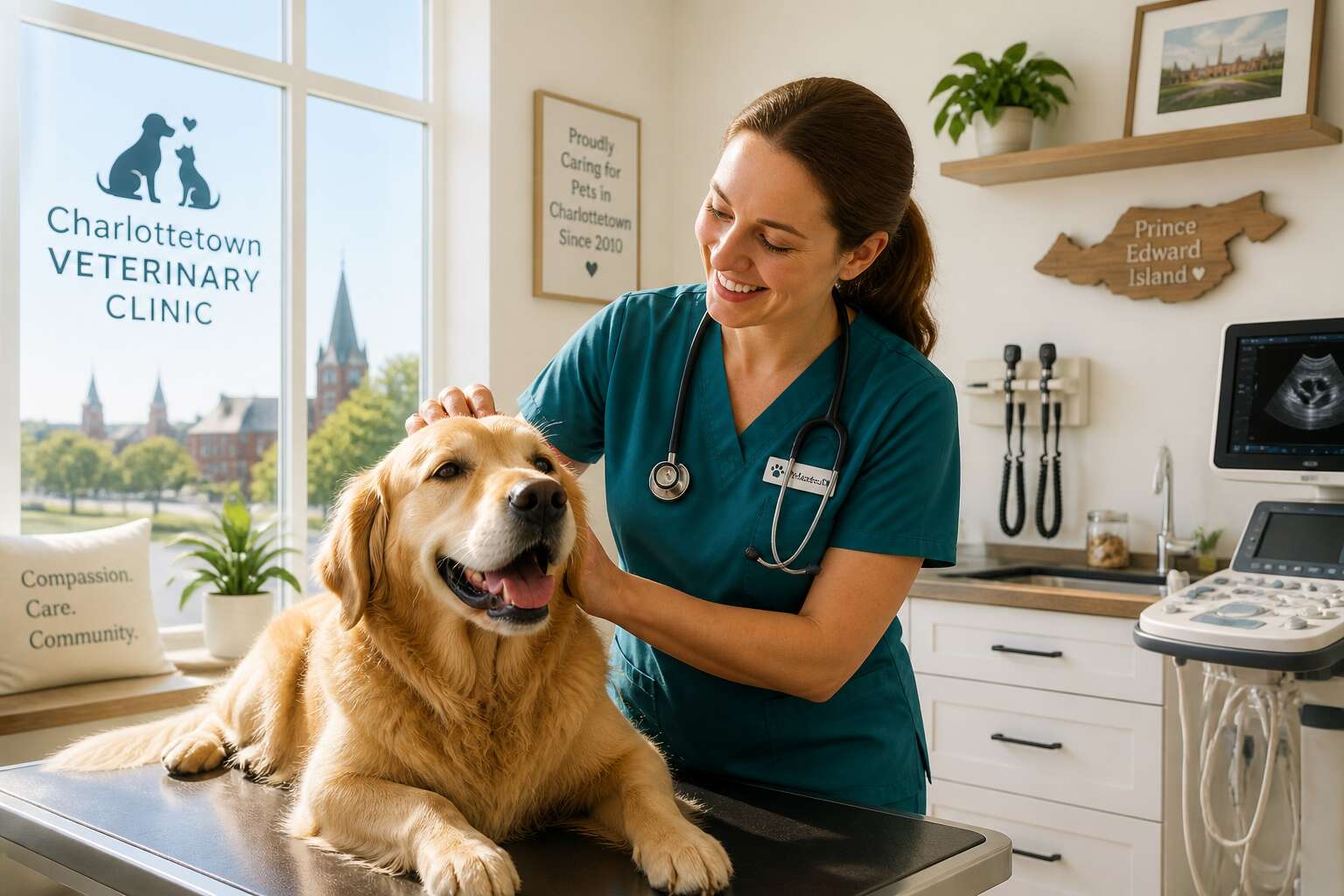
Understanding Your Pet’s Health Needs
Recognizing Common Illnesses in Pets
Pets hide illness with surprising skill. A dog will happily eat a shoe while nursing a fever. Recognizing common illnesses in pets requires attention to subtle shifts in thirst, sleep, or enthusiasm for car rides. At a vet clinic charlottetown, these behaviours often tip off the team before symptoms turn dramatic.
- Changes in water intake
- Sudden weight change
- Lethargy or hiding
Understanding your pet’s health needs means reading those quiet signals. A healthy appetite can mask underlying issues. So, if your feline friend starts ignoring dinner, don’t assume pickiness. Schedule an exam. Early detection keeps costs low and tails moving.
Why Regular Check-Ups Matter
Time moves differently for our companions. A single lap around the sun carries seven or more years of wear for a dog, and cats age even faster in their early years. That is why a yearly examination at a vet clinic charlottetown matters more than a quick weigh-in. Regular visits catch the gradual accumulation of age before it becomes a crisis.
Preventive care builds a baseline. When your vet knows your pet’s normal heart rhythm, joint flexibility, and organ function, subtle deviations become obvious. This is especially vital for animals entering their senior phase, when dental disease and kidney strain often appear without warning.
- Routine blood work reveals early organ changes
- Vaccinations protect against regional diseases
- Dental cleanings prevent systemic infections
These visits help your pet grow comfortable with the clinic environment. You gain the confidence that comes from knowing exactly where you stand.
Tailoring Care to Different Pet Types
Felines and canines have distinct physiological weaknesses. A cat’s kidneys fail silently, while a dog’s joints degrade visibly. Your vet clinic charlottetown team understands these differences intimately. I have seen owners apply canine care to felines with disastrous results!
Tailored preventive plans address species specific risks.
- Felines require thyroid and renal screening earlier than dogs.
- Canines need orthopedic assessments and parasite control based on lifestyle.
- Exotic pets demand habitat and dietary reviews.
The right approach for a Labrador diverges from that of a Sphynx. The clinic will adjust vaccination schedules and nutrition advice accordingly. That precision prevents the silent mismatches that shorten lives.
When to Seek Emergency Care
Your pet’s health needs shift without warning. One moment they’re fine, the next they’re retching or refusing to move. Knowing when to skip the waiting room and head straight for emergency care can save a life. The vet clinic charlottetown team sees too many owners who wait out a bloated stomach or a sudden collapse, hoping it resolves itself. It rarely does.
- Difficulty breathing or pale gums
- Seizures lasting more than two minutes
- Unproductive retching, especially in deep chested dogs
- Sudden inability to urinate or stand
These symptoms demand immediate attention. Your vet clinic charlottetown has after hours protocols, but you must make the call. A quiet cat that won’t eat for 24 hours is an emergency, not a mood. Don’t let cost or inconvenience delay what could be a reversible situation.
What to Look for in a Veterinary Practice
Location and Office Hours
Most pet owners underestimate how much their daily rhythm depends on the vet’s front door and front desk. Driving 15 minutes with a calm cat on a sunny Saturday is very different from coaxing a nervous dog across town after work. Proximity matters most when your pet is stressed or in discomfort, so measure the drive, not just in kilometres, but in the reality of your regular traffic patterns.
Your own working hours deserve equal scrutiny. A practice with impeccable credentials offers little value if the doors are locked precisely when you are finally free. Consider what the clinic’s schedule really looks like:
- Evening and weekend appointments for standard visits
- Saturday or holiday hours for routine vaccinations
- Clear drop-off windows if you commute early
A vet clinic charlottetown team that aligns its hours with your actual life will save you from countless small frustrations. The right location feels less like an errand and more like a seamless part of your week, and that convenience shapes how quickly you seek help for minor concerns before they become major ones. Choose a team whose presence in your neighbourhood and on your calendar reduces friction rather than adding to it. The vet clinic charlottetown you pass on your regular route might be the most practical choice of all.
Range of Services Offered
The true measure of a practice often lies in its quiet capacities. Consider what happens after the diagnosis, when the immediate crisis is over. The average pet’s health is a mosaic of small, ongoing needs, and a clinic that only handles annual vaccinations leaves you perpetually seeking second homes for your animal’s care.
It is an existential question of trust. Does the vet clinic charlottetown you have chosen possess the diagnostic power to see beyond the surface? A facility operating with limited in-house laboratories or outdated imaging equipment forces you into a waiting game, a purgatory of uncertainty where your companion’s condition may worsen while you chase referrals.
This is about the destiny of care. A robust offering generally includes:
– Digital radiography and ultrasound for internal clarity
– Soft tissue surgery for those unexpected growths
– In-house blood work for immediate answers
– Dental cleanings that prevent systemic disease
The range of services dictates the quality of their vigilance. When a clinic can pivot from a routine exam to an immediate surgical consult without transferring you across town, they demonstrate a commitment to the whole animalcrazy spectrum of life. Your search for a vet clinic charlottetown must therefore evaluate the depth of their arsenal, because in the silence of a waiting room, you need the confidence that they can handle the complexity that your beloved creature might bring through the door.
Experience and Credentials of the Vet Team
The real character of a practice reveals itself in small exchanges. I have sat in waiting rooms where staff remembered my dog’s name, his fears, his favourite treats. That memory is not accidental. You want a vet clinic charlottetown where the people behind the desk ask questions before they hand you a clipboard.
Credentials matter beyond the framed certificates on the wall. A qualified team continues to learn. When you meet the veterinarian at a vet clinic charlottetown, the conversation should cover their special interests, who handles overnight cases, and whether the technicians are certified.
- Years in practice and surgical experience
- Qualifications of veterinary technicians
- Continuing education commitments
- The ratio of veterinarians to support staff
A clinic that welcomes these questions earns your confidence. The trust built in those first conversations carries you through the harder moments, the quiet evenings when you need their advice the most.
Emergency and After-Hours Support
Three a.m. calls are the true test of a practice. You want a vet clinic charlottetown that answers with calm authority, not a sleepy voicemail. Ask about their emergency protocol before you need it. Who handles the phone after hours? Is it a veterinarian or a triage nurse? What is their response time for a bleeding wound or a blocked cat?
Some clinics partner with a regional emergency hospital. Others keep a rotating on-call team. Both can work, but the details matter. Look for clear communication about wait times and costs.
- Does the after-hours line reach a live human?
- Are your pet’s records accessible during an emergency?
- How do they coordinate with the nearest 24 hour facility?
I have seen clinics stumble at 2 a.m. because no one knew the password for the back door. That kind of failure is preventable. Choose a vet clinic charlottetown that rehearses the chaos. Their after-hours support should feel like a promise, not a guess!
Modern Diagnostic Equipment
Modern veterinary medicine depends on precision. The days of guessing based on symptoms alone are fading. When you visit a vet clinic charlottetown, the technology they use to see inside your pet truly matters. In-house digital radiography and high-resolution ultrasound allow veterinarians to identify a torn ligament or a shadow on the lung immediately. This means a diagnosis in minutes, not days. Without these tools, a vet must rely on clinical signs and hope the physical exam tells the whole story. Often, it does not.
The ability to run comprehensive blood work on-site changes the timeline of care dramatically. A complete blood count and a chemistry panel can reveal kidney failure or diabetes during a single consultation. For senior pets, this immediate data supports more confident anesthetic plans. Ask which laboratory tests are performed in-house versus what gets sent away. Turnaround time for an external lab can range from 24 to 72 hours. When your pet is lethargic and refusing food, waiting three days for an answer feels like an eternity. The best practices invest heavily in this infrastructure.
Specific equipment worth inquiring about includes:
- Digital dental radiography to evaluate tooth root health below the gum line
- Echocardiography for assessing heart valve function and chamber sizes
- Blood pressure monitors to screen for hypertension and kidney disease
- In-house coagulation analyzers for pets undergoing surgery
Technology should serve the patient, not the other way around. A vet clinic charlottetown that invests in these tools demonstrates a long term commitment to accurate medicine. You want a team that interprets the images and the numbers with skill. The machine is only as good as the eyes reading the results. Look for a practice that pairs modern diagnostics with a willingness to explain the findings in plain language. That combination builds the kind of trust you need when the stakes are high. The right equipment shortens the path between uncertainty and a concrete plan, which is exactly what your companion deserves.
Client Communication and Follow-Up
You know that feeling when you leave a vet’s office with more questions than you had animals in the waiting room? Communication is the difference between a confusing diagnosis and a clear path forward. A vet clinic Charlottetown relies on is one that calls you back, not just with lab results, but with actual context. You should expect a follow-up call to check on your recovering pet, without having to wonder if you missed a memo. The follow-up protocol often reveals more about a practice’s culture than the lobby coffee ever could. Effective communication also works both ways, so establish a singular point of contact for updates and don’t apologize for asking for clarification on discharge instructions.
Expect prompt email summaries and clear medication schedules. The team should document everything in a patient portal that is easy to navigate, not resembling a spreadsheet designed by a caffeinated octopus. This level of transparency builds trust. You want to leave with peace of mind, not a headache. When your pet embarks on treatment, request a written care plan to avoid any confusion. A practice that excels at following up is worth their weight in gold, and it shows they treat your furry family member like their own. Clear communication turns a simple veterinary visit into a partnership.
Here is what good communication often involves:
- A same-day check-in call for any surgical patient.
- Access to the medical notes upon request without a fight.
- Direct access to speak with the veterinarian for a second opinion.
If you are looking for a vet clinic Charlottetown trusts, prioritize those who listen to your observations as much as they rely on their medical tools. That is the hallmark of superior client service.
The Value of Preventative Care for Your Pet
Vaccination Schedules for Dogs and Cats
Parvovirus is a relentless killer, yet a handful of carefully timed inoculations can stop it cold. A structured vaccination schedule carries a puppy or kitten from fragile newcomer to resilient companion, layer by layer. Core vaccines for dogs cover distemper, hepatitis, and parvovirus; cats require protection against panleukopenia, calicivirus, and herpesvirus. Boosters matter because immunity fades, and gaps invite trouble.
At a vet clinic charlottetown, the team assesses lifestyle, age, and regional disease pressure before tailoring the plan. An indoor cat might skip certain shots, while a social dog needs kennel cough coverage. The design is precise, and each visit builds a personalised roadmap. Consistency matters more than perfection; every booster reinforces the last, creating a dependable shield for the years ahead.
Parasite Prevention and Control
Did you know that a single mosquito can carry heartworm larvae, a parasite with a ninety percent chance of killing an untreated dog? That sobering statistic often gets a laugh from my clients, until they realise their pampered pooch has more in common with a wild animal than they think.
Fleas, ticks, and intestinal worms are not mere nuisances. They are vectors for disease, causing anaemia, Lyme disease, and severe gastrointestinal distress. A regular prevention protocol stops these threats before they breach your pet’s defences. For example, a monthly chewable tablet protects against heartworm and roundworm, while a topical solution repels ticks. At a vet clinic charlottetown, they recommend a strategy based on your pet’s specific lifestyle:
– Flea and tick control for outdoor adventurers
– Heartworm prevention for all dogs, regardless of residence
– Intestinal worming for both cats and dogs, scheduled three to four times a year
Indoor pets are not immune. Mosquitoes enter homes, and fleas hitch rides on human clothing. The cost of prevention is trivial compared to the expense and suffering of treatment. By staying ahead of these parasites, you buy your companion peace, comfort, and a longer lease on life.
Dental Hygiene and Its Impact on Overall Health
Eighty percent of dogs over the age of three already have some form of periodontal disease. The calculus accumulates silently beneath the gumline. The mouth is not a sealed compartment. When the gingival sulcus becomes a gateway for bacteria, pathogens travel into the bloodstream, forcing the kidneys, liver, and heart valves to bear the collateral load.
At a vet clinic charlottetown, dental prophylaxis is treated as a medical necessity. Plaque hardens into tartar within days, and brushing cannot reverse it once formed. At a vet clinic charlottetown, a professional ultrasonic scale and polish under anaesthesia remains the only effective intervention.
A thorough oral examination includes:
- Gingival pocket measurement to track bone loss
- Furcation evaluation where tooth roots divide
- Radiographs to reveal subgingival disease hidden from view
Chronic oral inflammation fuels systemic wear many owners misread as normal aging. Protecting the mouth protects the whole animal.
Nutrition and Weight Management Advice
In my observation, the most aristocratic figures in any household often walk on four legs. Yet, their nobility does not excuse them from the tyranny of the scale. Preventative care for your pet hinges on the quiet tyranny of portion control. A waistline viewed from above should show a curve, not resemble a slipper. We measure our own indulgences; the pet merely inherits our anxieties. At a vet clinic charlottetown, the advice is methodical and without sentiment. The regime involves:
– A defined cup size for dry food
– A disciplined approach to the human dining table
Lethargy often tracks a slow accumulation of extra grams. The body does not negotiate. It merely carries the weight.
Senior Pet Care and Wellness Plans
Senior pets cross a threshold where subtle shifts become meaningful signals. A seven year old Labrador is middle aged. A ten year old cat has entered its senior chapter. Wellness plans at a vet clinic charlottetown structure these years around predictability rather than reaction.
Blood panels, thyroid screening, and joint assessments form the backbone of geriatric oversight. The value of preventative care for your pet compounds with age. We see it every day in the clinic: a senior dog who still bounds to the door because a thyroid issue was caught early.
A senior wellness plan typically sequences:
- Baseline bloodwork to track organ function
- Weight and mobility evaluations at every visit
- Dental scoring under anaesthesia where warranted
These components shift the conversation from rescue to routine.
Your First Visit to a Veterinary Clinic in Charlottetown
Preparing Your Pet and Necessary Documents
First vet visits can unnerve even confident pets. Bring a familiar blanket or toy to ease the transition. Stay quiet and calm yourself. Let your pet explore the lobby for a minute before the appointment. I find this simple habit lowers stress for everyone!
At the vet clinic charlottetown, the team relies on your paperwork to understand your pet’s baseline. Gather the necessary documents ahead of time. Here is what you need:
- Photo identification
- Previous veterinary records
- Microchip registration details
- List of current medications
These materials give the staff a clear starting point. Add a short note about any shifts in appetite, energy, or behaviour. That note can highlight issues a form might miss. Proper preparation turns the first visit into a straightforward consultation.
The Initial Consultation and Physical Exam
The first visit to a veterinary clinic can feel like a significant milestone. For many pet owners in Prince Edward Island, it is a moment filled with questions about their companion’s health and well-being. When you step through the doors of a vet clinic Charlottetown residents trust, you are initiating a partnership that will shape your pet’s life for years to come. This initial appointment is more than a simple check-up; it is the foundation upon which a lifetime of proactive healthcare is built.
During the consultation, the veterinarian will carefully observe your pet’s movement, posture, and temperament within the unfamiliar setting. The physical examination is comprehensive, covering everything from the condition of the coat and skin to the health of the heart, lungs, and abdominal organs. The vet will also assess your pet’s eyes, ears, and dental health, looking for any subtle signs of developing issues that might otherwise go unnoticed. You will have the opportunity to discuss nutrition, exercise routines, and behavioral habits, providing the staff with a complete picture of your pet’s daily life.
The team will also review the essential documentation you brought, which ensures that your pet’s medical history is accurate. This process often includes:
– Verifying vaccination records to ensure all immunizations are current.
– Reviewing microchip identification details for proper registration.
– Discussing any previous medical conditions or ongoing treatments.
– Addressing specific concerns you have noted at home.
If this is a routine visit, the vet might schedule follow-up appointments for booster shots or parasite prevention. If the exam reveals an underlying condition, they will clearly explain the diagnostic options and treatment pathways available. By the time you leave, you should have a clear understanding of your pet’s health status and a tailored plan for their care. A visit to a vet clinic in Charlottetown is not simply about treating illness; it is about establishing a roadmap for a long, healthy, and happy life. The relationship built here becomes the cornerstone of your pet’s wellness journey, offering you peace of mind and professional guidance whenever you need it most.
Diagnostic Tests and What They Reveal
The first visit to a vet clinic Charlottetown pet owners choose is about gathering information. It is not merely a cursory glance at your animal. It is a structured investigation into their internal world.
Observations begin the moment your pet enters the waiting area. How they carry themselves, their reaction to new smells, and their initial response to the staff all provide context. The veterinarian will then perform a comprehensive physical examination, palpating the abdomen, listening to the heart and lungs, and checking the condition of the coat and skin. This hands-on approach can detect subtle changes in body condition that might otherwise go unnoticed.
After the physical exam, the conversation often turns to diagnostic testing. These tools offer a deeper look into your pet’s health and can reveal issues before they become visible.
– Fecal analysis checks for intestinal parasites.
– Blood work evaluates organ function and screens for anemia.
– Heartworm tests are essential for canine patients.
– Urinalysis helps assess the urinary system and hydration levels.
The decision to run these tests is not automatic. It is based on the specific findings from the physical exam, the animal’s age, and their medical history. For a young, healthy dog, the protocol will differ vastly from that for a senior cat. The goal is to establish a baseline for what is normal for your individual pet. This baseline becomes a reference point for future visits, making it easier to identify any deviations from their personal norm.
Understanding the rationale behind each test is part of the visit. The team will explain why a particular diagnostic is recommended and what the results could mean for your pet’s ongoing care plan. This transparency helps demystify the process and ensures you leave with a comprehensive understanding of your animal’s current state of health as determined at the vet clinic Charlottetown residents rely on.
Understanding Treatment Plans and Costs
A diagnosis is a starting point, not a finish line. The path forward can feel complex when you are presented with a treatment plan and its associated costs at a vet clinic Charlottetown pet owners visit. The financial aspect often causes the most friction, and understanding where those numbers come from is essential.
Several factors influence the final invoice, and knowing them beforehand can prevent surprises. A simple course of antibiotics differs vastly from the management of a chronic condition like diabetes, which requires ongoing monitoring and medication adjustments. Consider the broad categories that shape the estimate:
- The specific medications prescribed and their required duration
- Any necessary follow-up examinations to track recovery
- The complexity of the procedure, if surgery or hospitalization is involved
A treatment plan is a written roadmap. It outlines the diagnosis, the proposed therapy, and the expected outcome. The veterinarian will walk you through each line item, explaining the rationale behind the choice of medication or the necessity of a recheck. This is the moment to ask questions. Cost alone should not dictate care, but your financial comfort level must be part of the conversation to ensure you can follow through with the entire regimen.
The true value of a plan lies in its clarity. You are not just paying for a service; you are purchasing a strategy for your pet’s wellbeing. Conversations about expenses are a standard part of responsible care. A good veterinarian will present options that range from the ideal protocol to more budget conscious alternatives, allowing you to choose a course that fits your situation without compromising core medical principles. This transparency builds trust and ensures that financial constraints do not silently undermine your pet’s recovery. Ultimately, the goal is to align the medical needs with a practical approach you can sustain at the vet clinic Charlottetown locals trust for their animals.
Building a Long-Term Relationship with Your Vet
They say a person’s character is revealed by how they treat those who can do nothing for them. Our pets, those loyal companions, embody this truth daily. When you first walk through the doors of our vet clinic charlottetown facility, we understand you are entrusting us with a family member. This initial meeting is not merely a transaction; it is the first verse in a long and trusting ballad.
The air might smell of antiseptic and hope. A nervous puppy might be trembling in your arms. Our team greets you not as a case number, but as the beginning of a partnership. We are acutely aware that this first interaction sets the tone. We want you to feel the palpable shift from anxiety to assurance as we listen intently to your story about your furry friend.
During this visit, we delve into the everyday rhythms of your pet’s life. We are gathering the threads that weave the tapestry of their health. We want to know about their appetite, their energy levels, and their quirks. This information forms the bedrock of our future care. We will observe them moving, listening to their heart, and peering into their eyes with a genuine curiosity that goes beyond a checklist.
We also take this time to learn about your lifestyle. A bustling household with children requires a different approach than a quiet home with a solitary senior. This understanding allows us to tailor our advice specifically for you. Building a relationship is about consistency and trust, and it starts with these simple, honest conversations. We are not just your service provider; we aim to be your ally in the rewarding journey of pet parenthood.
– We review your pet’s daily routine to spot subtle changes early.
– We discuss your expectations and any anxieties you may have.
– We establish a clear communication channel for future questions.
As the years pass, this relationship matures. The nervous puppy becomes a dignified elder. Our team evolves with them, remembering their history, their fears, and their favorite treats. When you return for a routine check-up or a concerning ailment, we greet you as old friends. This continuity is the true essence of veterinary medicine. A familiar face in a moment of crisis can be a profound comfort, a steady hand in a storm.
Trust is not given; it is earned through every successful treatment and every gentle word of reassurance. We are committed to being that constant, dependable presence throughout the arc of your pet’s life. We find joy in watching them thrive and a solemn duty in caring for them when they falter. This is the covenant we make with you, a promise of unwavering loyalty that matches the loyalty they show you every single day. We want to be the sanctuary where your pet is always understood and never just a name on a file.
Beyond the Basics: Advanced Veterinary Services
Surgical Procedures and Anesthesia Safety
When your pet faces a complex procedure, the depth of care at a vet clinic charlottetown becomes evident. Advanced surgical services extend beyond routine operations, encompassing orthopedic repairs, tumor removals, and minimally invasive techniques. Each case demands a precise approach, where the surgical team’s skill intersects with rigorous anesthesia safety protocols.
Anesthesia is never trivial. We tailor anesthetic plans to each animal’s metabolic profile, using continuous monitoring for heart rate, oxygen saturation, and blood pressure. This vigilance reduces risks dramatically. The same commitment defines our surgical suite.
- Laparoscopic spays and biopsies
- Fracture fixation with plating
- Soft tissue reconstructions
Recovery receives equal attention, with dedicated nursing and pain management. For residents seeking comprehensive care, this vet clinic charlottetown integrates every safeguard into the operative journey.
Dental Cleanings and Extractions
A staggering 85% of pets over the age of three suffer from some form of periodontal disease, yet the condition often goes unnoticed until it becomes a serious health crisis. While routine care is the foundation of wellness, the true measure of a premier animal hospital lies in its ability to handle complex cases with precision and compassion. At a vet clinic Charlottetown residents trust, the commitment extends far beyond the examination table, offering a suite of advanced services designed to address intricate medical challenges head-on.
Diagnostic imaging often serves as the starting point for these deeper investigations. Digital radiology and ultrasound provide a non-invasive window into the body, allowing veterinarians to visualize internal organs and detect anomalies that physical exams might miss. For conditions that require a closer look, endoscopic tools enable doctors to examine the gastrointestinal tract without the need for major incisions. This commitment to advanced technology reduces recovery time and provides clarity when answers are not immediately obvious.
When a diagnosis leads to surgical intervention, the capabilities available locally are impressive. Beyond the routine procedures, the team handles intricate operations such as:
– Laparoscopic spays and biopsies, which minimize tissue trauma.
– Fracture repair utilizing specialized plating systems.
– Soft tissue reconstructions that require a steady hand and meticulous planning.
These procedures are performed under strict anesthesia protocols, ensuring that each patient receives individualized care tailored to their specific physiological needs.
The journey to wellness does not end when the patient leaves the operating room. A dedicated approach to pain management and rehabilitation is crucial for a successful outcome. Therapies such as laser treatment and targeted physical rehabilitation help pets regain their mobility and strength after surgery. This holistic view of recovery ensures that every animal returns to their vibrant selves, living comfortably and happily within their Charlottetown homes.
Digital Radiography and Ultrasound Imaging
A silent threat often lurks where the eye cannot see. This is the reality for pets with internal conditions that present no visible symptoms. Advanced imaging technologies have revolutionised how veterinary professionals uncover these hidden ailments. At a vet clinic charlottetown pet owners rely on, digital radiography offers high resolution images with remarkable speed and clarity, minimising the time an anxious animal must remain still during an examination.
Ultrasound imaging takes this diagnostic capability even further. It allows for real time evaluation of soft tissues, including the heart, liver, and kidneys. This modality excels at identifying masses, fluid accumulation, or structural changes that could indicate serious disease. Guided by these detailed visuals, veterinarians can perform procedures with a level of accuracy that was previously impossible. These tools transform uncertainty into a clear path toward treatment.
This technological arsenal provides tangible benefits for your pet’s comfort and care.
– Reduced radiation exposure compared to traditional film X rays.
– Immediate results, allowing for quicker clinical decisions.
– Non invasive imaging, which often eliminates the need for exploratory surgery.
– Detailed assessment of organ health for accurate prognoses.
With access to these sophisticated techniques, a pet’s silent discomfort stands little chance of escaping detection. The power of early, precise diagnosis offers the strongest foundation for a successful recovery. When your companion requires a closer look, knowing these resources exist within a trusted local facility provides profound peace of mind.
In-House Laboratory Testing
A blood sample can change everything. At a vet clinic charlottetown, in-house laboratory testing delivers results within minutes, not days. This speed allows veterinarians to adjust treatment plans during a single consultation, rather than leaving pet owners waiting in uncertainty.
Point-of-care analysers assess complete blood counts, liver and kidney enzymes, electrolytes, and pancreatic function. Urinalysis and faecal exams round out the diagnostic picture. These tools detect endocrine disorders, silent infections, and metabolic imbalances that physical examination cannot reveal.
For chronic conditions, serial testing tracks disease progression with precision. The same machine used today delivers the same benchmark in three months. That consistency informs medication dosing and dietary adjustments.
Your veterinarian at this vet clinic charlottetown holds the answers in hand before you leave the room.
Managing Chronic Conditions Like Diabetes or Arthritis
Chronic disease doesn’t follow appointments. By age ten, roughly one in three pets has a condition like diabetes or arthritis. Managing that steady decline takes daily monitoring and proportional adjustments.
At vet clinic charlottetown, care starts with baseline values: glucose curves, joint function, pain levels, and body weight. Those numbers decide the next steps. We don’t rely on guesswork. The treatment plan gets revised every time the metric changes.
- Insulin schedules and glucose curve timing
- Lameness scoring and joint mobility reviews
- Weight and dietary targets for metabolic strain
Owners watch daily patterns at home. They notice appetite, urination, stiffness, or sleep quality. Their feedback shapes the next adjustment. Chronic management at vet clinic charlottetown becomes a cycle of measuring, adjusting, and retesting. The disease stays, but the pet keeps functioning. That is the goal.
Referrals and Partnerships with Specialists
The limits of general practice become apparent when a case demands specialised expertise. At vet clinic charlottetown, the answer is a structured referral network. Board certified surgeons, oncologists, and dermatologists accept cases directly, while shared digital records prevent redundant diagnostics.
Referrals work in both directions. We send pets outward for advanced procedures, then receive detailed protocols for ongoing recovery care. This loop keeps the primary veterinarian as the central coordinator.
Common referral paths include:
– TPLO or fracture repairs requiring orthopaedic certification
– Radiation therapy planning for malignant tumours
– Allergy testing beyond standard serum screening
This partnership model shortens waiting periods between diagnosis and treatment. It also means a pet’s history never depends on a single clinician’s memory. The specialist sees the same baseline data we see, and the owner deals with one familiar team throughout.
0 Comments