
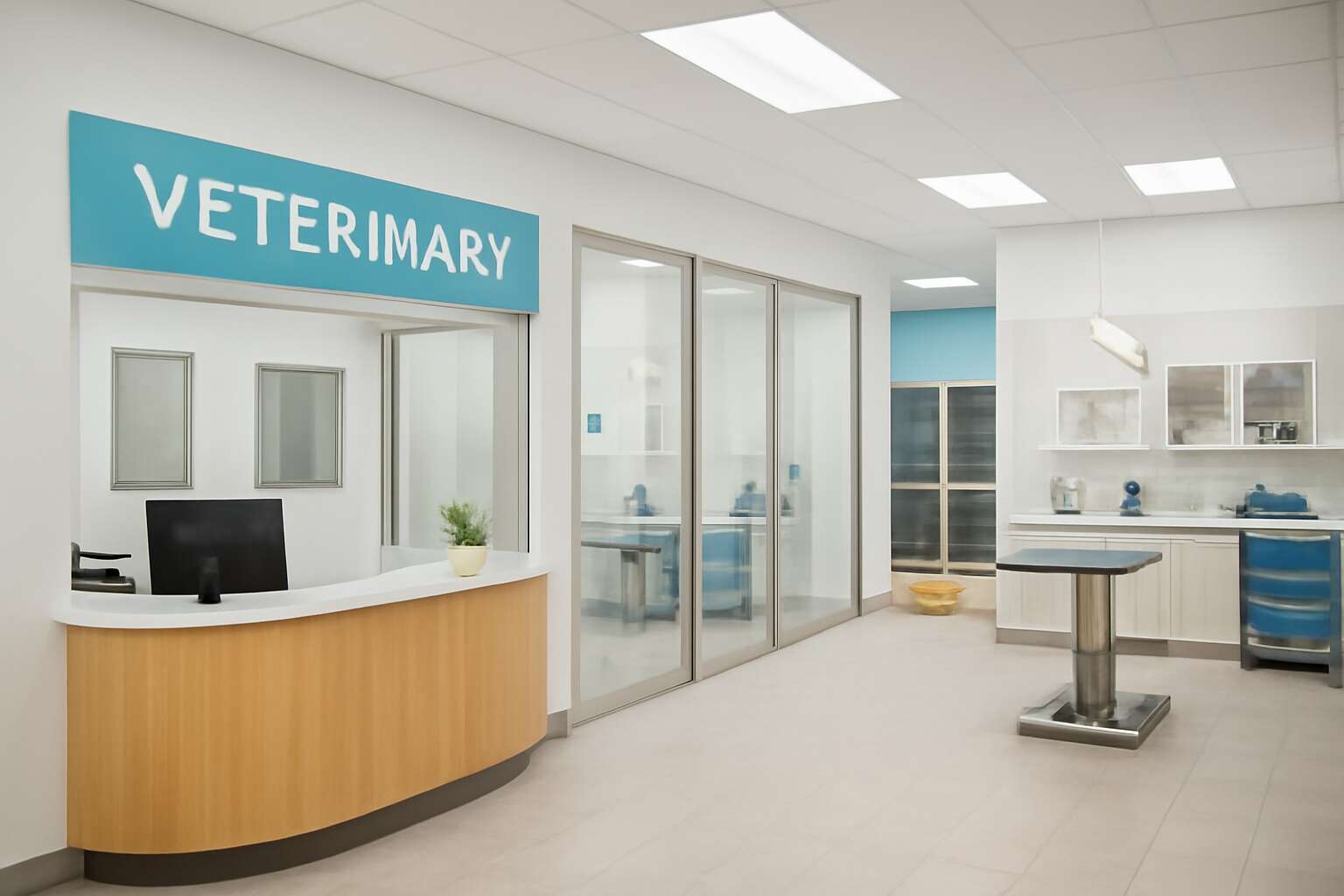
Design principles for veterinary clinic layouts
Workflow optimization and zoning in a veterinary clinic
South Africa’s busy clinics demand more than compassion—they demand flow. A well-planned vet clinic layout can boost throughput by up to 25%, and quiet the pet and owner alike. When workflow optimization guides every turn—from entry to exam to discharge—the experience feels almost literal magic!
Smart zoning keeps care moving. Focus areas that support workflow optimization include:
- Reception and triage zone that shields exam rooms from noise and odours
- Exam, treatment, and recovery spaces with clean-to-dirty separation
- Staff zones with clear sightlines to critical work areas
In practice, a clean division between reception, exam rooms, treatment spaces, and staff areas reduces bottlenecks and boosts safety. The result is a vet clinic layout that feels inevitable—efficient, reassuring, and ready for South Africa’s real-world pace.
Client comfort and privacy in the waiting area
First impressions matter—especially in a space where wagging tails outnumber smartphones. A recent SA survey found that clinics with brighter lighting and softer textures cut client anxiety by about 40%. A thoughtful vet clinic layout turns the waiting area into a calm forecourt rather than a noisy bottleneck, easing nerves for both pets and owners.
- Calming color palette with warm neutrals and natural textures
- Sound-absorbing materials and strategic layout to mute echoes
- Private comfort corners with screens or curtains for shy pets
- Accessible seating and clear pathways for families and service animals
Ultimately, the waiting room should feel like a gentle pause before care begins—an experience that reinforces trust and lightens the mood in a bustling SA clinic.
Accessibility and inclusivity in design
Design principles for a vet clinic layout start with people first. In SA clinics, accessible, human-centered spaces cut anxiety and speed up care. A thoughtful vet clinic layout puts accessibility at its core. We design with inclusivity in mind, balancing form and function to guide lighting, wayfinding, and flexible spaces that adapt to exams of all sizes.
- Step-free entrances and wide doorways
- Accessible reception counters and low-height signage
- Non-slip floors and sound-absorbent materials
- Inclusive restrooms and clear visual cues
This approach keeps care moving smoothly, reduces stress, and makes every visit feel considered and humane. The space should invite trust as soon as clients step inside!
Acoustics and lighting to support calm environments
‘Calm spaces heal faster,’ a longtime SA vet likes to remind us. In the vet clinic layout, acoustics and lighting act as the quiet heartbeat, guiding nerves toward steadiness. I favor soft daylight filtered through screens, amber-tinted LEDs, and sound-absorbent panels that hush footsteps and anxious breath, letting exams begin with ease!
- Acoustic ceilings and wall panels to soften sound
- Dimmable, warm LEDs aligned with circadian rhythms
- Glare-free screens and low-reflection surfaces
- Views to greenery or nature-inspired imagery for calm
When the atmosphere hums softly, staff focus sharpens and clients exhale. The result is care unfolding with grace, not haste.
Front desk, reception, and triage area layout
Intake flow from entrance to triage and exam rooms
“Space is care you can see,” a vet team leader once told me, and the effect is immediate. In the front desk, warmth and clarity set the stage—staff greet, owners pause, and anxious pets sense the tone. A thoughtful vet clinic layout, familiar in South Africa’s clinics, blends function with reassurance, guiding the eye toward simple check-in and gentle onboarding.
From the entrance, the triage area layout should offer immediate, quiet assessment. Screens and curtains create private bays; durable, wipeable surfaces handle the day’s bustle; owners feel seen without being overwhelmed as the first steps unfold toward the exam rooms.
- One-way circulation that prevents cross-traffic between waiting clients and clinical staff
- Clear signage and sightlines from front desk to triage and exam rooms
- Dedicated, softly lit dog and cat corridors with sound-damping materials
As intake becomes a seamless thread from entry to examination, the clinic breathes easier, and trust takes root in its quiet competence.
Signage and wayfinding for clients and pets
In the art of vet clinic layout, the front desk is a lighthouse. Five seconds to greet, to set a calm mood, to invite trust—these are the invisible coordinates that guide every visit. In our South African clinics, warmth meets clarity: the reception becomes a bridge into the care journey.
A few design touches keep the flow clear:
- Eye-level signage with clear sightlines
- Color-coded corridors for clients and staff
- Quiet, wipeable surfaces and clutter-free counters
- Gentle onboarding prompts at the desk
Signage and wayfinding for clients and pets should feel effortless, with legible fonts and friendly icons guiding every paw and heel. From the entrance to triage and exam rooms, the vet clinic layout balances privacy with everyday efficiency.
One-way circulation, crisp sightlines, and calm corridors keep stress low as care unfolds—trust grows in the quiet competence greeting you at every turn.
Privacy and infection control at the front desk
In South Africa, the front desk acts as a lighthouse—calm lighting, a confident hello, and an unhurried line of sight into triage. The reception should feel like a bridge into the care journey, guiding pets and people with clarity as they step toward triage and exam rooms in a steady, welcoming rhythm.
- Protective screens and private counters preserve client and patient privacy
- Non-porous, wipeable finishes with strategically placed hand-sanitising stations
- Dedicated staff access with separate entrances to limit cross-contact
Privacy and infection control come to life here: sneeze guards, private counters, antimicrobial finishes, and touchless stations tame the bustle. The triage area sits adjacent to the desk, enabling quick assessment while keeping anxious animals at ease. In this vet clinic layout, every inch is tuned to calm, flow, and dignity.
Examination rooms, diagnostic spaces, and surgical suite integration
Standard exam room design and equipment layout
In South Africa, the first impression of a clinic room seals trust—the statistic is blunt: nearly seven in ten guardians judge care quality by ambience and atmosphere.
Within a well-crafted vet clinic layout, examination rooms rely on a height-adjustable table, non-porous surfaces that gleam like marble, integrated monitoring, and a clean-to-dirty flow that keeps interventions calm and clinical.
- Height-adjustable exam tables
- Non-porous, easy-clean surfaces with rounded corners
- Integrated monitoring ports and power near the table
- Dedicated handwashing, PPE storage, and waste management
Nearby diagnostic spaces should pulse with speed: lead-lined walls for radiography, shielded doors, and ready access to samples. This vet clinic layout keeps triage and recovery in near reach; the surgical suite sits adjacent, enabling seamless transitions, with prep areas, proper ventilation, and sterile processing.
Imaging, in-house diagnostics, and sample processing flow
Rural South Africa clinics know the first step inside matters. Nearly seven in ten guardians judge care quality by ambience and atmosphere—the moment a pet crosses the threshold, trust is planted.
In a well-considered vet clinic layout, examination rooms connect to a fast, shielded diagnostic space and imaging station. In-house diagnostics and swift sample processing flow reduce handoffs, while integrated monitoring near the table keeps outcomes calm and precise. This layout also positions the surgical suite adjacent to prep areas for seamless transitions.
Key features that support this integrated flow:
- Seamless imaging and radiology access from the exam line
- On-site laboratory for rapid tests with secure refrigeration
- Dedicated sterile processing and sample storage
- Digital result tracking integrated with patient records
Surgical suite zoning and sterile processing area
Seven in ten guardians in South Africa judge care quality by ambience the moment a pet crosses the threshold; trust blooms in lamplight and quiet floors. A deliberate vet clinic layout places examination rooms alongside shielded diagnostic spaces, where careful sightlines and hushed hums reassure. I craft these zones as a single breath—calm, precise, intimate.
Diagnostic spaces run in close concert with the exam line, granting fast access to the surgical prep zone. A corridor stays off-stage for sterile processing, yet never far from the team’s rhythm—a nocturne of steady hands and careful turns.
- Direct adjacency from exam rooms to diagnostic bays
- Proximity of the surgical suite to sterile prep and instrument storage
- A dedicated sterile processing corridor with secure access
- Digital tracking of instruments and patient records for seamless flow
This is the heartbeat of the vet clinic layout.
Equipment placement and cable management for safety
Seven in ten guardians in South Africa judge care quality by ambience the moment a pet crosses the threshold. That truth anchors the vet clinic layout: flow from examination to diagnosis to surgery should feel seamless. This rhythm builds trust and speeds relief.
Examination rooms and diagnostic spaces sit in close, deliberate proximity, with sightlines that spare no corner. Surgical suite integration means prep and recovery zones align with quiet corridors, so equipment moves in calm arcs, not jostling crowds. We design these spaces to be calm and precise.
- Secure cable channels and raceways to keep floors clean and safe
- Dedicated power hubs with surge protection and easy accessibility
- Locking instrument trolleys and quick-release trays for clean, smooth transitions
Together, this vet clinic layout becomes a steady environment that supports quick decision-making, quiet focus, and respectful handling for every patient.
Storage optimization and supply organization
Flow is trust, and the floor confirms it—with seven in ten guardians in South Africa judging care the moment a pet crosses the threshold. The vet clinic layout should weave examination rooms, diagnostic spaces, and the surgical suite into a single, calm arc where every step feels natural.
Examination rooms and diagnostic spaces should share proximity and clear sightlines, guiding a patient from intake to results without detours. The vet clinic layout must align with prep and recovery zones along quiet corridors, enabling equipment to move in smooth arcs rather than stiff, crowded routes.
Storage optimization and supply organization keep this rhythm intact.
- Clear, labeled storage bins with color coding for quick access
- Locking instrument trolleys and quick-release trays for smooth transitions
- Dedicated supply hubs near exam and diagnostic zones
Operational flow, waste management, and safety protocols
Cleaning and infection control workflows between patients
Operational flow is the heartbeat of a clinic. In the right vet clinic layout, teams glide from intake to triage, through exam rooms, and back to treatment zones with purpose. Cleaning and infection control workflows between patients are not afterthoughts but the spine of safety, guiding every wipe, swap of PPE, and change of gloves. Waste management sits in a clearly labeled chain—separating sharps, biohazard, and general refuse to protect staff, clients, and pets. I’ve seen this choreography calm anxious pets and reassure worried owners alike.
Across shifts, teams rely on consistent routines that keep the clinic calm and the air clean, in line with South Africa’s standards.
- Waste streams and zones aligned with infection control
- Between-patient cleaning, PPE changes in shared corridors
- Staff and client safety protocols in reception and treatment areas
These design decisions reinforce a clinical aura that puts pets—and people—at ease.
Waste segregation, sharps, and biohazard handling
Operational flow is the heartbeat of a clinic, and the right vet clinic layout makes the dance look effortless. A recent industry survey found clinics with disciplined workflow report up to 40% fewer cross-contamination incidents. From intake to triage to exam rooms, the choreography should feel predictably calm—like a well-rehearsed puppy parade.
Waste management and safety protocols anchor that calm. In line with South Africa’s standards, waste streams are clearly separated and tagged: sharps go to puncture-resistant containers, biohazard waste to sealed bags, and general refuse to closed, labeled bins. Between-patient cleaning and PPE swaps are built into the flow, not bolted on after the fact.
- Waste segregation: sharps in dedicated containers
- Biohazard handling: sealed bags and labeled receptacles
- General refuse: away from exam rooms, with foot-operated lids
These design decisions give a clinical aura that puts pets and people at ease, a vibe that travels from the waiting area to the treatment bays—proving the vet clinic layout is as much about ambience as anatomy.
Regulatory compliance, safety features, and staff training
Within a well-crafted vet clinic layout, operational flow becomes a dance staff and pets understand. In South Africa, clinics with disciplined workflow report up to 40% fewer cross-contamination incidents—proof that structure makes calm feel choreographed, from intake to treatment bays. Walls guide staff and animals with predictable rhythm.
Waste management and safety protocols are the heartbeat of that calm. The layout enforces clear waste streams, with color-coded tagging and dedicated corridors that keep waste away from waiting areas. Aligning with South Africa’s standards, sharps, biohazard waste, and general refuse are contained and traceable.
Regulatory compliance, safety features, and staff training are woven into the architecture. Design choices anticipate audits and ongoing education, from hand hygiene stations to easy-to-clean surfaces and secure storage for sensitive items. Training is continuous, with daily check-ins and drills that cement a culture of safety. This is the vet clinic layout.


0 Comments