
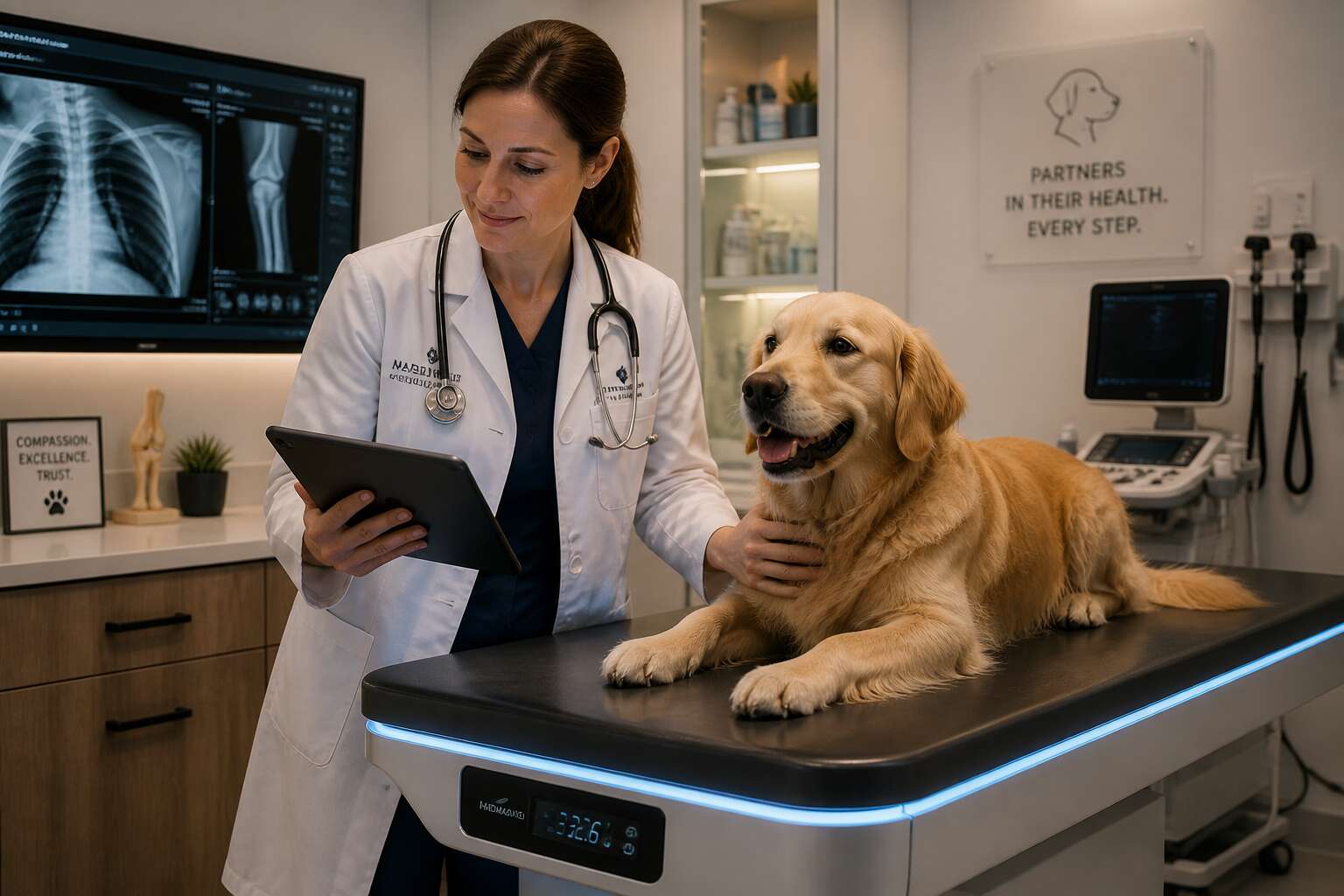
Telehealth and Remote Pet Care
Virtual Wellness Exams
A quiet shift is underway in how South African pet parents attend to their companions. A single internet connection now opens the door to a veterinary consultation, yet the true wonder lies in the remote physical assessment. Virtual wellness exams let you and your pet stay in your own space while a veterinarian observes, questions, and evaluates. This approach reduces stress for anxious animals who associate clinics with travel. It also offers faster triage for niggling concerns that might otherwise wait days.
Your vet can check several things during a remote session:
– Respiratory effort and rate
– Mucous membrane colour via video
– Weight and body condition trends
– Gait and posture while your pet moves on command
These checks give real clinical insight without the upheaval of a car trip. South African practices are weaving this accessible layer into the broader realm of innovative veterinary services, ensuring care finds you when your routine cannot bend. This is not a replacement for hands-on treatment, but a thoughtful companion to it. The convenience feels almost impossible, yet the assessment is genuinely grounded in sound medical practice.
Smartphone Health Monitoring Apps
Your companion’s pulse, once a mystery until the clinic visit, now flickers across your phone’s screen in real time. Smartphone health monitoring apps capture heart rate, respiratory rhythm, and sleep quality, delivering a continuous stream of data to your veterinary practice. This telemetric vigilance, paired with innovative veterinary services, transforms subtle changes into early warnings.
Consider what these apps observe:
– Resting heart rate trends
– Sudden drops in activity
– Sleep interruptions
These signals, read over days, often reveal what a single examination cannot. Your vet, armed with this history, can discern the slow creep of illness. The phone becomes a tool for continuous observation, and the care remains deeply personal, even from a distance.
Home-Based Diagnostic Kits
The night your dog shivers behind the couch, a home diagnostic kit can read the fever before you dial the clinic. Telehealth bridges that gap, turning your kitchen table into a site for immediate assessment.
These kits sample blood, urine, and stool with precision. They detect parasites, glucose spikes, and renal dysfunction. Data flows to your veterinarian, who interprets it through innovative veterinary services, no exam room required.
- Ear swabs for infection markers
- Lateral flow tests for tick-borne diseases
- Microfluidic panels for organ function
In South Africa, where distances stretch long and clinics thin, this remote vigilance offers a practical solution. The diagnosis arrives, but the ritual of care remains at home.
Cutting-Edge Diagnostic Tools
Artificial Intelligence in Radiology
One radiologist I know claims her AI tool catches spinal issues in dogs faster than a Jack Russell catches a squirrel. That is the new reality of innovative veterinary services. Artificial intelligence in radiology now identifies subtle anomalies that human eyes might skip after a long day.
Common finds include:
- Early signs of osteoarthritis
- Lung nodules smaller than a grain of rice
- Dental root abscesses
These tools do not replace veterinarians. They handle the tedious first pass, flagging suspicious areas for a second opinion. In South Africa, where travel distances can delay specialist reviews, this speed matters. A rural clinic can send a scan to a Johannesburg specialist and receive an AI-assisted report within hours, not days.
DNA Screening for Hereditary Conditions
DNA screening now maps a dog’s entire genetic code for less than the cost of a single X-ray. For South African pet owners, this unlocks a deeper layer of preventive care. Innovative veterinary services increasingly offer these tests to identify mutations before symptoms appear.
Conditions like degenerative myelopathy or progressive retinal atrophy no longer require guesswork. A simple cheek swab reveals risk profiles. Breeders use this data to make informed decisions. Owners gain time to adjust diets and exercise routines.
- Hip dysplasia
- Elbow dysplasia
- Von Willebrand disease
This is not fortune telling. It is precise biology. The laboratory comparison takes weeks, but arrives with clear interpretation.
Wearable Biosensors
A single temperature spike can signal infection hours before visible signs. Wearable biosensors now capture these shifts continuously, giving South African pet owners a view into their companion’s physiology once reserved for specialist clinics. These devices track heart rate, sleep quality, and movement patterns with accuracy.
What sets this technology apart is its practical use in rural settings, where vet access may be limited. A farmer can monitor a working dog’s recovery from injury without repeated travel. Innovative veterinary services are adopting these tools to support preventive care plans that adapt to real conditions.
Common metrics include:
Recovery trends after surgery
Abnormal gait detection
Stress responses during travel
The data integrates with existing records, allowing practitioners to spot anomalies early. This is stewardship grounded in biology and built for everyday life.
3D Imaging and Printing
Three-dimensional imaging has transformed how we perceive the invisible. Where once a fracture hid behind swelling or a tumour lurked within soft tissue, now we render the entire landscape in precise detail. This clarity changes everything for surgical planning in South African clinics, where precision is not a luxury but a necessity.
The leap from two dimensional radiographs to volumetric models allows practitioners to examine structures from every angle. This matters deeply for complex orthopaedic procedures and oncology cases, where the margin between success and complication is measured in millimetres. When the full architecture is visible, the surgical approach becomes deliberate rather than exploratory.
Additive manufacturing, the technical term for 3D printing, takes this diagnostic clarity one step further. Custom implants and surgical guides are now fabricated to match each patient’s unique anatomy. The practical applications include:
– Pre operative planning models for client education
– Customised bone plates for fracture repair
– Prosthetic limbs for amputee animals
These tools represent innovative veterinary services that move beyond generic solutions toward individualised care. The technology also serves the broader ecosystem, assisting wildlife veterinarians in creating bespoke orthotics for injured raptors or antelope. The result is a practice of medicine that honours the singular nature of every patient.
Tailored Therapeutic Approaches
Regenerative Cell Therapies
Nearly 70% of South African dogs over ten years old show signs of osteoarthritis. That statistic from the University of Pretoria drives my work as a veterinarian. Regenerative cell therapies offer a tailored therapeutic approach for these aching joints. Instead of masking pain with daily pills, we harvest adipose tissue, process it, and inject the concentrated cells directly into the damaged site. The body does the rest!
For a working farm dog, every step matters, and the therapy often restores mobility within weeks.
Key benefits for rural pets:
- Reduced inflammation without long term drug side effects
- Slower progression of joint degeneration
- Faster return to active duties
These innovative veterinary services are changing how we manage chronic conditions, particularly in remote areas. The outpatient procedure requires light sedation only. For older animals who have given years of loyal service, this is a second chance.
Precision Parasite Control
In the dry Karoo, one parasite generation can undo months of careful breeding. Precision parasite control ignores blanket schedules. We test each flock’s faecal samples, assess pasture contamination, and then choose targeted compounds based on resistance profiles. This tailored therapeutic approach protects the animal and the environment.
These innovative veterinary services measure larval burdens across seasons. For a herd that grazes irrigated kikuyu, the treatment window differs from one on native bushveld. Instead of dosing blindly, we apply the smallest effective dose. Consider the practical differences:
- Lower chemical exposure for working dogs
- Precise timing against dormant larvae
- Reduced risk of resistant worm strains
That is stewardship.
Cannabis-Derived Treatments
A quiet shift is happening in veterinary consulting rooms. Cannabis-derived treatments, once dismissed as fringe, are entering measured discussions about pain management and inflammation. For our patients, the difference is often quality of life.
These compounds interact with the endocannabinoid system, which regulates immune response and nerve signalling. We assess each animal’s liver function and current medication before considering dosage. This serves targeted support, never recreation.
- Dosage calibrated to body mass and species
- Monitoring for drug interactions
- Source verification for purity
Our innovative veterinary services expand as research grows. We stay grounded in evidence, using cannabis-derived options only where they outperform conventional care. That restraint is part of the precision.
Customized Dietary Plans
Consider the last time your pet’s condition demanded more than a standard prescription. The answer often lies in the bowl. Tailored therapeutic approaches begin with customized dietary plans that address metabolic pathways, not just symptoms. Each meal becomes a measured intervention, calibrated to support organ function and cellular repair. We look beyond generic protein sources and examine amino acid profiles, fatty acid ratios, and glycemic load specific to your animal’s pathology.
Take a senior dog diagnosed with early renal insufficiency. A generic low-protein diet might suffice, but a customized plan considers phosphorus binders, omega-3 supplementation, and hydration strategies simultaneously. The result is a slower disease progression and improved energy. Our evaluation process includes:
– Blood chemistry and urinalysis review
– Body condition scoring and muscle mass assessment
– Palatability trials for long-term compliance
– Micronutrient interaction checks
We consider dietary adjustments medical interventions. These plans evolve monthly, informed by rechecks and owner feedback. The precision of nutritional therapy often determines whether pharmacological doses can be reduced. This discipline reflects the full scope of innovative veterinary services, where nutrition is not an afterthought but a cornerstone of clinical reasoning.
Streamlined Practice Operations
Automated Appointment Scheduling
According to a recent survey, South African pet owners spend an average of 38 minutes coordinating vet appointments, often while juggling a barking dog and a conference call. Automated appointment scheduling changes that. It lets clients book, reschedule, and cancel without human intervention, which means fewer missed calls and more available exam rooms. These systems integrate with practice software, sending reminders and flagging no-shows. For clinics, this is a quiet shift. Consider what a streamlined schedule offers:
- Real-time availability updates
- Automatic follow-up prompts
- Reduced administrative workload
This is one of the innovative veterinary services that quietly improves daily operations. The result? Staff focus on medicine, not on the phone. Clients appreciate the convenience, and the practice runs smoother. It is unglamorous and effective!
Digital Record Access for Owners
A client should not need to call the front desk for a printout of their own pet’s blood work. Digital record access changes that expectation. Owners log into a secure portal and view vaccination history, prescription refills, and diagnostic results the moment they are released. This removes a major source of phone traffic and front-desk friction.
For the practice, the effect is direct. Staff no longer search for physical files. Receptionists do not relay lab results. The portal pushes updates automatically, and the team can flag anomalies for follow-up. This innovative veterinary service quietly redefines the client relationship.
- Fewer administrative phone calls
- Faster client response times
- Clearer communication on treatment plans
South African clinics that adopt this approach reduce front-desk friction and gain more informed owners. As an innovative veterinary service, this also reduces operating overhead.
Smart Inventory Management
A single expired vaccine can disrupt an entire morning of appointments. Smart inventory management solves this by tracking stock levels, expiry dates, and reorder points automatically. Staff members see what is running low without opening a cupboard or counting boxes. This system removes guesswork and prevents unnecessary purchases.
Usage data from these platforms shows which products move quickly and which sit unused. A practice can then adjust its orders with confidence, reducing waste and freeing up cash. This is one of many innovative veterinary services being used by South African clinics to keep operations smooth and budgets predictable.
- Automated reorder alerts when stock reaches a set minimum
- Expiry notifications that flag soon to expire items
- Daily usage reports that map prescription trends
Post-Visit Telehealth Follow-ups
After a pet leaves the clinic, the work does not end. Post-visit telehealth follow-ups turn discharge instructions into a two-way conversation. A quick video call can catch a wound that is healing poorly or a medication that causes vomiting. This prevents return visits that clog the waiting room.
Clinics using these follow-ups report fewer emergency callbacks. Nurses triage concerns remotely, and veterinarians only step in when needed. This is another example of innovative veterinary services reshaping South African practices.
- Reduced no-show rates for rechecks
- Faster detection of postoperative complications
- Clearer communication with anxious pet owners
Telehealth follow-ups also free up consultation slots for new cases. The practice runs smoother, and clients feel looked after without leaving home.
Client Education Portals
The gap between what a veterinarian advises and what an owner actually does is a silent drain on practice efficiency. Studies suggest that pet owners often forget or misinterpret a significant portion of dietary and medication instructions. A client education portal closes this chasm by curating knowledge within a structured digital space.
Clinics deploy these portals to host aftercare videos, nutritional guides, and behavioural articles by condition. When a diagnosis is delivered, the team tags relevant resources. The client receives a notification, finds the material instantly, and can review it at their own pace. For the practice, this reduces the volume of repetitive telephone queries and empowers staff to focus on more complex issues. Vet-led content about parasite prevention or dental health becomes available to the right person at the right moment, which reduces later presentations for preventable diseases.
This system is becoming a cornerstone of innovative veterinary services in South Africa. The portal functions as the practice’s digital memory, holding the specific protocols that front-of-house staff cannot convey during a busy consult. By giving clients a defined place to learn, clinics are seeing decreased anxiety around medication regimens and a distinct drop in cancelled procedures due to misinformation. It respects the owner’s intellect while protecting the practice’s schedule. When clients feel informed, they become more compliant, which naturally strengthens the clinic’s revenue stability and the animal’s health outcomes.
0 Comments