
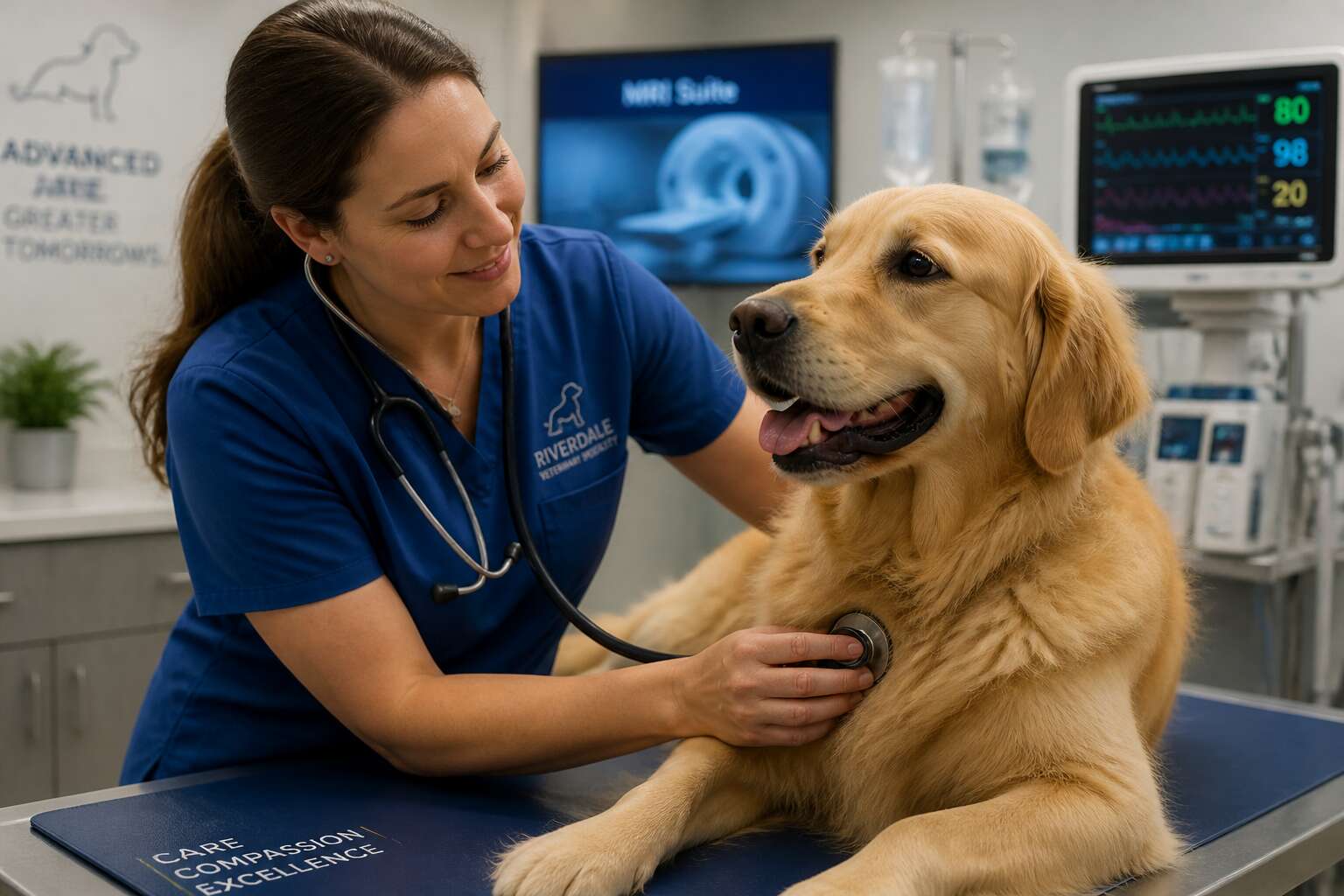
Identifying When Your Pet Needs a Referral
Signs That Standard Care Isn’t Enough
Only one in twenty pets with complex diseases ever sees a specialist, though early referral can transform outcomes. Your primary vet is skilled, but time and equipment have limits. When treatment plateaus, it is time to look deeper.
I have seen too many cases where a referral came late. Consider these signs that standard care is no longer enough:
- Repeated hospital visits for the same issue without improvement.
- Unexplained laboratory results that no one can clarify.
- A second opinion from another general practice still leaves questions.
Recognizing these signs early matters. Veterinary specialist services provide advanced imaging, oncology, and surgery beyond standard clinic capability. Your local vet will coordinate the handoff, ensuring seamless care for your companion.
Conditions That Require Advanced Expertise
Just 4% of South African pets with complex diseases ever see a specialist. That should unsettle you! When cancer, epilepsy, or heart failure strikes, general practice often reaches its limit. These conditions require advanced imaging, pathology, and targeted chemotherapy. Veterinary specialist services step in exactly at that point.
- Oncology demands tumor staging and precise drug protocols.
- Neurology needs MRI interpretation and surgical planning.
- Cardiology uses echocardiography to guide long term therapy.
Your vet knows when to refer. We have seen how specialist teams possess tools uncommon in local clinics. A timely referral changes the outcome. The condition itself, not months of plateau, signals the need.
Questions to Ask Your Primary Veterinarian
I have watched pet owners wait weeks before voicing the referral question, often until their companion’s condition has visibly deteriorated. That hesitation is costly. The moment your primary veterinarian mentions uncertainty, advanced imaging, or a procedure they cannot provide in-house, you have reached the doorway to veterinary specialist services.
Treat that conversation as an opportunity, not an awkward challenge. Ask what your vet hopes to learn from a specialist. Ask which tests come first and how the results will change the treatment path. These questions reveal whether the gap is manageable or urgent.
Use the visit to gather clarity on the following points:
- What diagnoses have already been excluded?
- Which veterinary specialist services align with this condition?
- What signs in the next few days would make an immediate referral necessary?
Understanding the Referral Process from First Call to Appointment
The gap between a referral suggestion and the first specialist appointment averages two weeks across South Africa’s major veterinary hubs. That silence is costly. When your primary vet signals they cannot do more, veterinary specialist services take over the load. The faster you move, the better the outcome.
Your first call to a specialist practice will involve a triage nurse collecting your pet’s history. They will ask for your vet’s name, the suspected condition, and current medications. Veterinary specialist services operate on a referral model that expects your primary vet to remain involved.
The referral process from first call to appointment follows a clear sequence:
1. Phone triage and record transfer from your referring practice.
2. Scheduling based on clinical urgency.
3. A written summary sent back to your vet after the consultation.
Specialist practices in Johannesburg and Cape Town typically book urgent cases within 48 hours. Routine referrals may wait a week. Keep your phone nearby and your records organised.
Diagnostic Limitations in General Practice
Somewhere between an ultrasound probe and a surgeon’s scalpel, a door opens that your family vet cannot walk through. The diagnostic toolbox in general practice is built for efficiency, not for wrestling with the obscure. When your pet presents with a chronic cough, recurring ear infections, or a limp that shifts sides, the first-line workup often returns a clean bill of health. That result is a lie. It is a limitation of the equipment, not a validation of the patient.
The gap between a normal blood panel and a real diagnosis is where veterinary specialist services earn their keep. General practitioners rely on standard radiographs and in-house chemistry analysers. These tools flag the obvious. They struggle with the subtle. A specialist has access to high-definition CT imaging, advanced ultrasonography, and rhinoscopy. The difference is not just resolution; it is the ability to ask the body a more specific question.
Diagnostic dead ends often look the same from the outside:
– Persistent clinical signs despite normal baseline tests
– Imaging findings that are ambiguous or artefact-heavy
– Conditions that respond to antibiotics, then relapse within weeks
– Idiopathic symptoms that require cytology or histopathology for clarity
Your primary vet knows when the puzzle has outgrown the room. When the differential list still includes a dozen rare conditions and the standard suite of tests has been exhausted, the referral is not an admission of failure. It is the next logical step. Specialist practices have the time to run the three-hour endocrine panels and the patience to read the hundredth slide.
The transition happens quietly. One day you are holding a prescription for yet another course of steroids. The next, you are sitting in a waiting room with an internal medicine specialist who wants to know about your pet’s travel history, dietary indiscretions, and the exact date the symptoms first appeared. This deeper history-taking is a diagnostic tool in itself. The specialist builds a narrative from fragments that the general practice workflow simply cannot assemble. Time becomes a diagnostic instrument, and veterinary specialist services provide the luxury of unhurried investigation.
Types of Specialty Care Available
Internal Medicine for Complex Chronic Diseases
Three out of five pets over seven years will face a chronic condition, and each case demands a deeper diagnostic approach. Veterinary specialist services provide that approach through internal medicine, a field built for diseases that linger and evolve.
Internal medicine addresses complex chronic diseases like chronic kidney disease, diabetes mellitus, and systemic lupus. It requires integrating clinical signs with advanced imaging and histopathology to adjust treatment over months. I have seen specialists extend a pet’s comfortable years by recalibrating therapy as the disease shifts, which general practice often lacks the time to do.
Surgical Specialties: From Orthopedics to Neurosurgery
Nearly one in five pets will develop a condition requiring surgical intervention that goes beyond the scope of a general practice. When radiographs reveal a fragmented joint or a spinal lesion, the path forward demands precision that only a specialist can provide. This is where surgical specialties transform a dire prognosis into a manageable plan, giving your companion a tangible second chance.
Orthopedic surgery addresses the mechanics of movement, from cranial cruciate ligament ruptures to complex fractures that refuse to heal properly. A specialist corrects these structural failures using advanced techniques, such as total hip replacements or arthroscopy, which require equipment and training unavailable in most clinics. For a working dog in the Cape, this means returning to full mobility rather than living with a permanent limp. The decision involves more than skill, it involves timing and a thorough assessment of bone density and joint health.
Neurosurgery, a subset of this field, tackles the nervous system with equal precision. Conditions like intervertebral disc disease or brain tumours call for delicate operations that carry inherent risk. A veterinary neurologist uses MRI imaging to pinpoint the exact source of pain or paralysis before ever entering the operating room. The outcome can be dramatic, a paralysed pet walking again within weeks, but it relies on a swift referral before nerve damage becomes irreversible.
Surgical specialists also handle soft tissue procedures that are equally demanding, such as tumour removals with clean margins or corrective airway surgery for brachycephalic breeds. These operations improve quality of life, not just survival. When you pursue veterinary specialist services, you gain access to an entire team, including anaesthetists and critical care nurses, who manage every phase of the operation. This collaborative approach reduces complications and shortens recovery times, a benefit that becomes evident in the days following surgery.
– Orthopaedic repairs for joint instability and fractures
– Spinal decompression and tumour excision
– Soft tissue reconstruction after trauma
Oncology and Advanced Cancer Treatment Options
A quarter of pets will face cancer, and that is where veterinary specialist services alter the outcome. A veterinary oncologist reviews histopathology and advanced imaging to determine tumour stage. Treatment is selected from options like metronomic chemotherapy, immunotherapy, or stereotactic radiation. Each protocol is tailored to the specific cancer and the pet’s overall health.
In South Africa, referral hospitals in Johannesburg and Cape Town provide these therapies without requiring overseas travel. The oncologist also manages side effects and monitors response through serial imaging. That level of scrutiny separates a specialist from a general practitioner. It means adjusting doses when a mast cell tumour resists, or switching to palliative care when a brain lesion becomes inoperable. The focus stays on quality of life, not just survival time.
What to Expect During a Specialty Consultation
The Initial Assessment and Comprehensive Medical History
The phrase “I thought I had more time” repeats often in specialist clinics across South Africa. When you arrive for a consultation, the initial assessment goes beyond a quick look. A specialist observes your pet walking, resting, and reacting to touch before asking a single question.
Your pet’s comprehensive medical history forms the basis of this visit. Expect to walk through every vaccination, allergy, and odd habit. Specialists often need details you consider insignificant. For example:
1. When the symptom first appeared and its exact pattern.
2. Any changes in appetite, thirst, or energy levels.
3. Past responses to medications prescribed by your primary vet.
This depth allows veterinary specialist services to connect subtle clues with complex conditions. The process feels thorough because it is. Every answer shapes the next diagnostic step, giving your pet a tailored path forward.
Advanced Diagnostic Imaging and Laboratory Testing
A single MRI sequence can reveal a brain lesion that months of symptom management has missed. Advanced diagnostic imaging at a specialist centre uses CT, ultrasound, and fluoroscopy to view the body in motion and in cross-section. Your pet remains under monitored anaesthesia, which ensures sharp images without movement artefact.
Laboratory work runs parallel to imaging. Specialised testing identifies hormonal imbalances and cellular abnormalities that primary screening simply does not cover.
These two streams converge in one consultation. Veterinary specialist services in South Africa interpret them together, filtering false positives and confirming suspected pathologies. The final diagnosis rests on evidence. I have watched this evidence completely redirect a treatment plan.
Developing a Personalized Treatment Plan
You will notice the pace changes during a specialty consultation. There is no rush, no queue of anxious owners outside the door. Instead, your veterinarian sits with you, gathering context that primary visits rarely capture. We record every previous test, every medication trial, every behavioural shift.
After the physical examination, we begin constructing a personalized treatment plan. This plan adjusts to your circumstances. It accounts for your schedule, your budget, and your pet’s response to past therapies. We map short term goals and long term possibilities, then adjust as new information arrives.
- We summarise the findings in plain language
- We outline each treatment option with its tradeoffs
- We agree on a monitoring schedule
Veterinary specialist services in South Africa make room for this dialogue. The plan is never static! It evolves with every follow up, every blood result, every small victory.
Coordination with Your Regular Veterinarian
Coordinating with your regular veterinarian transforms a specialty consultation from an isolated event into a continuum of care. After we draft the treatment plan, the conversation doesn’t end. Veterinary specialist services thrive on this ongoing partnership. We compile a detailed discharge summary, flag potential drug interactions, and schedule a direct debrief with your primary practitioner. The information we exchange includes:
- revised medication dosages and timing
- imaging findings that may affect routine checkups
- specific warning signs that warrant an immediate return
Your vet then adjusts routine care to match our recommendations. That feedback loop catches subtle shifts early. It spares your pet from redundant procedures. And it gives you one cohesive team, rather than two separate voices. This collaboration is where the real progress happens!
Cost Considerations and Financial Planning
The first visit to a specialist often feels more deliberate than a standard checkup. Expect to spend a full hour in consultation, not just ten minutes. The specialist will review every prior record, speak with you at length about your pet’s behaviour at home, and physically examine the patient with a focus on the problem area. This is not a rushed process. The entire team operates at a slower, more methodical pace because diagnostic accuracy depends on it.
Cost transparency is a cornerstone of reputable veterinary specialist services. Before any procedure, you will receive a detailed, written estimate that breaks down every component of proposed care. This upfront clarity allows you to plan without hidden surprises.
– Consultation fees reflect the specialist’s extended training
– Advanced imaging and laboratory panels carry separate charges
– Hospitalisation and nursing care are itemised per day
– Anaesthesia and surgical fees depend on procedure complexity
Many practices offer phased payment plans or work with third-party financiers to spread the cost of major treatments over several months. Financial planning starts with that initial estimate. Ask about the total projected cost, not just the first procedure, so you can make informed decisions without compromising your household budget. The investment in veterinary specialist services often reduces long-term spending by resolving complex conditions correctly the first time.
Second Opinions and Alternative Therapy Discussions
A specialist consultation often feels less like a verdict and more like a collaborative search for answers. When you arrive, the conversation may naturally turn toward second opinions. Far from being defensive, veterinary specialist services routinely encourage external perspectives, especially when a diagnosis remains elusive.
You might also discuss alternative therapies, such as hydrotherapy, acupuncture, or dietary modifications. These are not replacements for proven medicine, but complementary options that can support recovery. The specialist will lay out evidence for each approach, including potential risks and expected outcomes.
- Which alternative therapies are supported by clinical evidence?
- How might a second opinion change the treatment trajectory?
- What outcomes can reasonably be expected within a specific timeframe?
That level of openness turns the consultation into a genuine dialogue, and ultimately, a more confident path forward. It is exactly why these veterinary specialist services exist to explore every angle before committing to a plan.
The Role of Board-Certified Specialists
Education and Training Required for Board Certification
The journey to board certification demands years of rigorous preparation. After earning a veterinary degree, a candidate completes an internship, then a residency of three or more years under expert supervision. They must undertake original research, publish findings, and manage complex caseloads, all while being evaluated against exacting international standards.
The final hurdle is a demanding examination that tests both knowledge and clinical judgement. For pet owners, the value of veterinary specialist services lies in this rigorous training. The letters behind a specialist’s name are earned through countless hours of study and a relentless pursuit of excellence. I have watched these clinicians detect what seemed imperceptible, transforming uncertainty into a clear path forward. Veterinary specialist services offer precisely that level of assurance.
The Importance of Accreditation and Hospital Standards
Board-certified specialists carry a responsibility beyond reading scans or prescribing stronger drugs. They reconstruct the entire story of an illness, weighing previous failures and subtle signs that general practice might miss.
That expertise, however, depends on the hospital around it. Accreditation forces a facility to prove its equipment, staffing, and hygiene routines meet measurable standards. Veterinary specialist services offered in a non-accredited setting carry uncertain risk.
For South African pet owners, this distinction is practical. Travel to a referral centre often costs significant time and money. Knowing the hospital holds recognised standards helps justify the trip:
- Regular external audits of surgical and imaging suites.
- Documented training for every nurse handling anaesthesia.
- Emergency protocols rehearsed across all shifts.
Those systems turn a specialist’s judgment into dependable action. I have seen that structure make the difference in practice.
How Specialists Work Alongside General Practitioners
Specialist care in veterinary medicine often seems like a solitary pursuit, but the true art lies in the partnership it builds with your family practitioner. Picture a quiet conference room in Johannesburg where a surgeon and a locum vet from a rural practice study the same radiograph. Their conversation is a delicate dance of shared knowledge and mutual respect. This collaboration is not a mere courtesy. It is the backbone of effective veterinary specialist services.
A board-certified specialist brings a forensic eye to a case, but your general practitioner holds a decade of context about your dog’s temperament, your cat’s peculiar eating habits, and the subtle shifts you might not have articulated. Together, they form a formidable alliance against disease. This shared ownership translates into a seamless experience for you and your pet. The specialist manages the acute crisis while your regular vet monitors the long-term recovery. The transfer of information is constant and deliberate, ensuring no detail is lost between clinic and referral centre.
– The specialist reviews the full history, not just the referral letter.
– The general practitioner is updated after every major decision point.
– Both communicate directly to adjust treatment for your pet’s daily reality.
I have watched this exchange transform a puzzling illness into a manageable condition. The specialist explains the unusual pathology, and the GP translates that complexity into simple home care instructions. That continuum of wisdom is what separates a good outcome from a remarkable one. You are not choosing between two doctors. You are gaining a second pair of eyes that works in concert with the first.
Continuing Education and Staying Current with Research
The quiet pursuit of knowledge defines a board-certified specialist. In human medicine, a physician might refresh their knowledge every decade. Veterinary specialists face a different reality. The biological diversity of their patients, from exotic birds to massive canines, means research never truly settles. One year a treatment protocol for feline cardiomyopathy shifts completely. The next, a new imaging technique for equine joints changes surgical planning.
Continuing education is not a box to tick for these professionals. It is a professional obligation that shapes clinical decisions. Specialists attend international conferences, scrutinize peer reviewed journals, and participate in rigorous case rounds. The best of them challenge their own assumptions.
Veterinary specialist services depend on this commitment. When a general practitioner refers a challenging dermatology case, they trust the specialist has seen the latest comparative studies on immune mediated disorders. That trust carries weight. A referral centre thrives on this knowledge flow.
– Specialists monitor clinical trials from major veterinary universities.
– They audit their own surgical outcomes against published benchmarks.
– They contribute to research in their subspecialty fields.
This constant learning loop ensures your pet receives care anchored in evidence, not anecdote. A specialist’s responsibility is to the animal in front of them, informed by the collective wisdom of their field. That is not a luxury. It is the standard.
Making the Most of Your Specialty Veterinary Experience
Preparing Your Pet for the Visit
Most pet owners arrive at a specialty clinic armed with little more than hope. A referral letter and a folder of tests are helpful, but preparation goes further. Your veterinary specialist services visit will move faster and yield sharper results if you set the stage properly.
Calm your pet before the car ride. Use a familiar carrier and cover it with a towel to reduce visual stress. Confirm whether your pet needs to fast for bloodwork or imaging. Missteps here can cancel the appointment!
- Full medical history, including vaccination records
- A list of current medications with dosages
- A video of any seizures, limps, or odd behavior
Your own notes should describe when symptoms began and how they progressed. The specialist will rely on your observations. With solid groundwork, veterinary specialist services can focus on diagnosis and treatment, not on chasing missing information.
Effective Communication with the Specialist Team
A specialist can interpret a complex MRI series in minutes. Extracting useful information from a silent pet owner takes considerably longer. You hold the essential details of your pet’s daily life, and veterinary specialist services rely on that knowledge.
Effective communication with the specialist team means prioritising your concerns. Announce the chief complaint at the outset. During the consultation, say exactly what you observed, when you observed it, and whether it has worsened.
Make these three details known:
- The first symptom you ever noticed
- Any changes after medication
- Patterns that seem to trigger the problem
The specialist’s questions will sharpen as you answer. Veterinary specialist services work best when owners are active participants, not passive spectators. If a term confuses you, ask for plain language. Your clarity shapes the outcome.
Following Up after Treatment: Home Care and Monitoring
Returning home after specialist treatment feels quiet, but this phase demands sharp attention. The veterinary specialist services continue through your observations. You are the one who sees the late-night restlessness, the hesitant bite, the shallow breathing. Keep a simple record of what changes and when.
- Water intake and urination frequency
- Behaviour around food
- Pain responses when touched
- Sleep patterns
A phone call after five days matters as much as the procedure itself. The specialist needs your narrative to interpret progress. A pattern of improvement or decline, described plainly, shapes the next decision. Silence after discharge is not a sign of success.
Managing Multiple Specialists for Complex Cases
Two specialists cannot treat one patient in isolation. A neurologist and an oncologist may recommend different drugs for the same condition. Veterinary specialist services depend on a shared clinical timeline to prevent these conflicts.
The clinical timeline is an ongoing record kept by the owner. It contains test results, medication changes, and home observations. This timeline is shown at every specialist visit. Alignment across multiple experts requires three elements:
- Each specialist reviews the others’ written reports.
- One person coordinates all medication adjustments.
- A written summary follows each consultation.
When specialists see the same data, their decisions align. A crowded calendar becomes coherent. The invested effort reduces setbacks and makes progress clearer.
Building a Long-Term Relationship with Your Veterinary Team
The real value of specialty care emerges over time. Each visit builds a deeper picture of your pet’s health. Your specialist begins to know your pet’s baseline, their normal state and daily rhythms. That context changes everything. It turns isolated appointments into a continuous conversation.
Trust grows through repetition. You learn which observations matter. Your team learns how your pet responds to treatment. This mutual understanding makes veterinary specialist services more precise with every visit.
Stay engaged between appointments. Record changes at home. Bring questions, even small ones. Show up ready to participate fully. I promise, your consistent presence anchors the entire process.
Insurance and Reimbursement for Specialty Care
The phrase ‘pre-authorisation’ has ended many a hopeful consultation before it began. I have watched pet owners arrive with high expectations, only to realise their insurer expects a referral letter and a cost estimate before any specialist appointment. That paperwork, tedious as it is, protects your pocket.
Most South African policies require you to request approval for veterinary specialist services in advance. This means phoning the insurer, submitting clinical notes from your general practitioner, and waiting for a written confirmation. The process rewards persistence. Keep a folder, physical or digital, with every document.
- Verify annual limits for specific conditions
- Ask the specialist’s office for a detailed itemised quote
- File claims within the insurer’s stated deadline
Beyond the financial maze, the experience itself improves when you participate. Bring your own observations, ask for explanations in plain language, and request a written aftercare plan. The specialist’s expertise matters less if you leave with unanswered questions.

0 Comments