
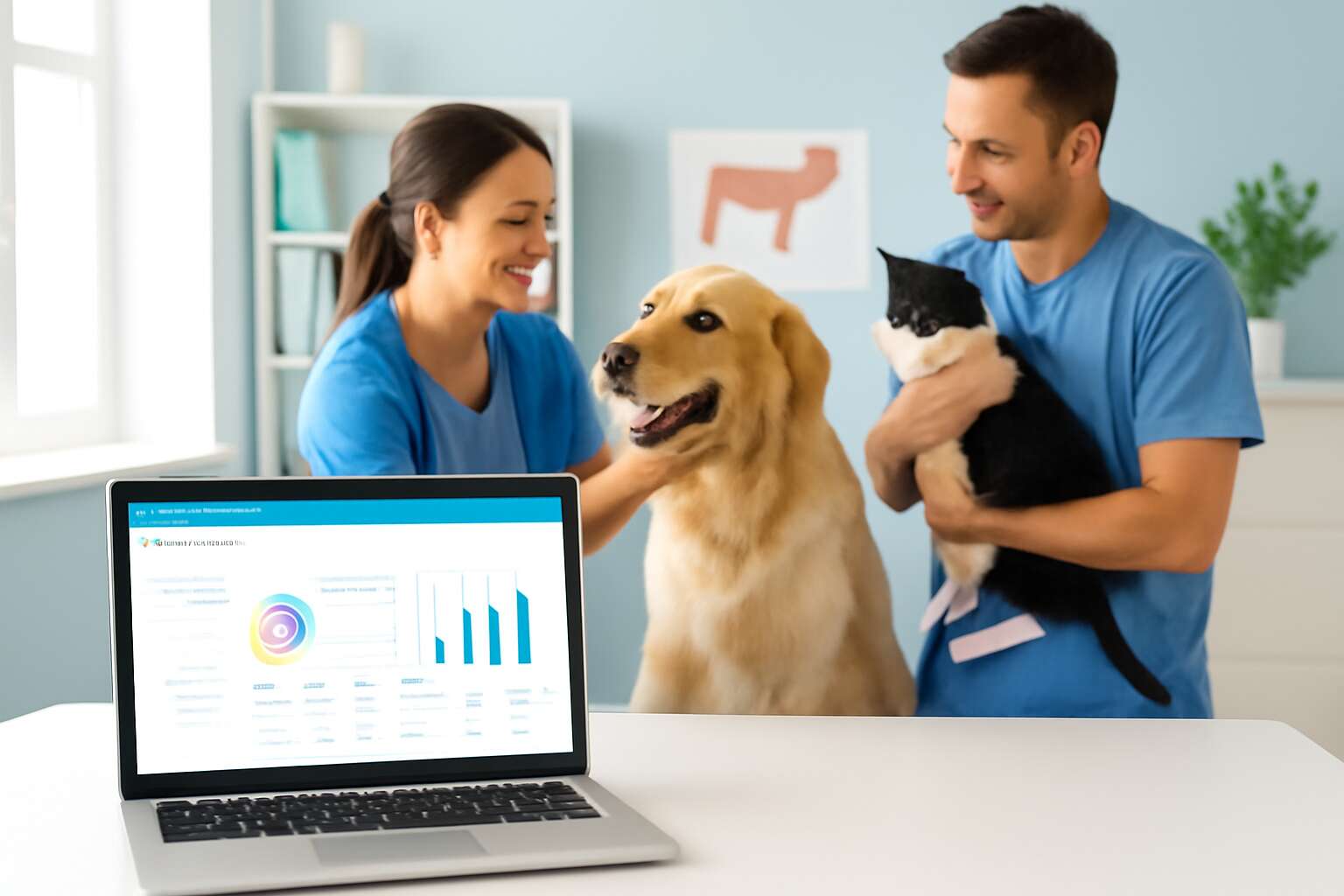
Understanding the concept and scope of veterinary information management systems
Definition and scope of veterinary information management systems
Crucial data shouldn’t be chasing you around the clinic; clinics report up to a 40% reduction in admin time with a modern system. A veterinary services information management system isn’t just software—it is the backbone that ties patient histories, appointments, billing, and lab results into one reliable stream. In South Africa, this concept scales from single-branch practices to multi-site networks, enabling faster care decisions and fewer spreadsheet-induced headaches.
Understanding its scope means mapping what it covers:
- Central patient records with medical history
- Appointment scheduling and reminders
- Billing, invoicing, and insurance prompts
- Lab results, imaging, and integration with external systems
- Inventory control for meds and consumables
- Security, access controls, and POPIA compliance
With the right implementation, clinics gain actionable insights, seamless workflows, and room to breathe between consults.
Key users and clinical workflows
Understanding the concept and scope of a veterinary services information management system begins with seeing care as a continuous thread. It binds patient histories, appointments, billing, and lab results into one reliable stream, transforming scattered notes into a living record that travels with the patient and the team through every touchpoint.
Day-to-day workflows hinge on seamless access and role-based clarity. Key users move through triage, consult, treatment, and follow-up with confidence because the system surfaces the right information at the right moment!
- Veterinarians and clinicians
- Practice managers and owners
- Veterinary nurses and technicians
- Receptionists and administrative staff
In South Africa, this framework becomes a compass for multi-site networks, aligning care decisions, invoices, and lab data across locations. A veterinary services information management system isn’t merely software—it anchors the patient journey with intention and humanity.
Impact on patient care and clinic operations
“Care travels on a single thread,” a veterinary whisper guiding clinics toward unity. A well-tuned information system threads patient histories, appointments, billing, and lab results into a living record that travels with the animal and the team through every touchpoint—curious, humane, and precise.
This approach reshapes day-to-day operations: triage becomes swifter, documentation clearer, and data silos melt away. The right details surface at the right moment, empowering clinicians to focus on the patient in front of them.
- Unified access to real-time records
- Role-based dashboards for teams
- Streamlined billing and lab data sharing
For South Africa’s multi-site networks, this becomes a compass that keeps care decisions, invoices, and lab data aligned across locations. A veterinary services information management system anchors the patient journey with intention and humanity, from bustling clinics to quiet rural surgeries.
Industry drivers and trends in veterinary data management
“Data is care in motion,” a seasoned SA clinic director quips, and a veterinary services information management system makes that motion legible. Understanding its concept and scope means seeing it as a spine that stitches patient histories, appointments, billing, and lab results into a single journey—not bound to one room.
Industry drivers and trends in veterinary data management reshape daily practice. Look for cloud-native platforms, interoperability across disparate systems, and real-time analytics that surface the right detail at the right moment.
- Interoperability across clinics, labs, and billing
- Cloud adoption and scalable storage
- Role-based access paired with privacy compliance (POPIA)
- Mobile access for remote and rural sites
For South Africa’s multi-site networks, these forces turn data governance into care governance—aligning decisions, invoices, and lab data across locations with a single rhythm. In South Africa, the veterinary services information management system becomes the compass that keeps care and commerce in cadence.
Key features and modules for veterinary practices
Patient records and medical history management
In South Africa’s clinics, data can feel like a quiet guardian. Clinics using a veterinary services information management system report up to 40% faster access to patient history and up to 30% fewer record discrepancies—data with real, life-saving weight.
The heart of the module is a centralized, longitudinal patient record: species, owner, allergies, medications, immunizations, surgeries, and notes, all accessible to the care team. It weaves imaging and lab results into a single, coherent thread.
- Unified patient profiles with complete histories
- Timeline of vaccinations and treatments
- Digital prescriptions and dosing tracking
- Linked imaging and lab results
In a market where privacy is sacred, robust access controls and audit trails guard the data—without slowing the clinical workflow.
Appointment scheduling and workflow automation
In South Africa’s clinics, the clock never truly rests. A veterinary services information management system makes its heartbeat visible, aligning appointment scheduling with the rhythm of each clinic day. The result is workflow automation that cuts double bookings, speeds check-ins, and frees the team to tend patients rather than paperwork. It reads the clinic’s hours like a map—corridors, bright consults, and a rhythm in its precision.
Key features that define this module include:
- Online appointment booking with flexible times and owner preferences
- Automated reminders and confirmations to reduce no-shows
- Intelligent task routing that aligns duties with staff strengths
- Real-time calendar views for reception and clinical teams
Behind the scenes, access controls and audit trails guard the data without dulling the clinical edge. For South African clinics, this balance between privacy and speed is the quiet backbone of care, making each appointment feel deliberate and safe.
Billing, invoicing, and insurance processing
Billing should hum like a well-tuned instrument—precise and predictable. Across South Africa, the veterinary services information management system turns invoicing into clarity, linking every service, medication, and boarding charge to transparent statements. This module makes it easy to generate compliant invoices, capture payments, and present owners with accurate, easy-to-understand bills—often before they leave the reception desk. A quiet efficiency like this supports better cash flow and stronger trust with clients.
- Automated invoicing aligned with service codes and packages
- Insurance processing with electronic claims and real-time status updates
- Secure payments, receipts, and owner communications across channels
Behind the scenes, audit trails, robust access controls, and seamless integration with appointment and medical record modules guard privacy while preserving speed. In SA clinics, that balance feels like the quiet backbone of care, enabling smoother claims and fewer disputes.
Inventory and supply chain management
Stockouts are the unspoken drama in a bustling SA practice; the wrong dispensing level can turn a smooth consult into a scramble. A veterinary services information management system treats inventory as a living organism—tracking every needle, bottle, and batch with the calm precision of a well-timed reception bell. Real-time visibility across clinics means you know what’s on hand and what’s about to expire.
Key features include:
- Real-time stock tracking across wards
- Batch and expiry control with FIFO/FEFO
- Automated reordering based on min/max levels
- Supplier catalogs, pricing, and automated purchase orders
- Audit-ready reporting and compliance insights
In SA clinics, inventory mastery dovetails with procurement discipline and audit trails, all neatly anchored by the veterinary services information management system. The result is fewer stockouts, leaner waste, and steadier cash flow—the kind of sturdy backbone even the busiest reception desk would envy.
Reporting and analytics dashboards
South African clinics are racing data—yet many still sprint in the dark. A veterinary services information management system turns that data into a reliable compass, and observers report up to 30% faster decision-making when dashboards surface the numbers at a glance. These reporting and analytics dashboards transform scattered numbers into clear narratives; from client trends to care quality, everything becomes visible!
Core features and modules underpinning the dashboards include:
- Financial performance and revenue analytics
- Clinical care quality and outcomes tracking
- Appointment utilization and workflow efficiency
- Regulatory compliance and audit-ready reporting
In practice, it frees teams from data drudgery and puts strategy squarely in their hands.
Data governance, security, and compliance in veterinary information systems
Data privacy and owner consent management
Within a veterinary services information management system, data governance is the quiet backbone of trust. In South Africa, privacy laws shape care, and 82% of data incidents trace to weak access controls—proof that safeguards are not optional. Clinics succeed when governance aligns with daily practice: clear ownership, documented policies, and disciplined audits. Security and compliance are not shackles; they are a compass guiding patient safety, owner trust, and professional integrity.
- Data privacy by design with explicit owner consent logging
- Granular, role-based access controls
- Auditable trails and prompt breach notification readiness
- POPIA-aligned data retention, encryption, and secure backups
These measures underpin data privacy and owner consent management, turning consent into a living document that can be reviewed and updated as laws and expectations evolve.
When governance, security, and compliance breathe as one, the system becomes a living guardian—the veterinary services information management system protecting both patient history and owner trust.
Access control and authentication
Security is not optional—South Africa’s data landscape shows 82% of incidents trace to weak access controls. In a veterinary services information management system, governance is the quiet shield behind every patient record. When roles, rules, and reviews align with daily practice, trust follows.
- Role-based access controls with least-privilege permissions
- Multi-factor authentication for all user types
- Strict session timeouts and device trust
- Immutable audit trails with real-time anomaly alerts
Access control and authentication are the frontline. Implement granular RBAC, enforce least privilege, and require strong identity verification for every user—from veterinarians to reception staff. Multi-factor authentication, strict session management, and continuous monitoring turn access into accountable action. We stay vigilant.
Auditable trails, prompt breach readiness, and POPIA-aligned data handling keep the system compliant while safeguarding both patient histories and owner trust. A well-governed veterinary services information management system acts as a living guardian, tying governance to safe practice and professional integrity.
Audit trails and data integrity
Security stories from South Africa’s clinics reveal that 82% of incidents trace to weak access controls. In this realm, data governance, security, and compliance act as the quiet shield behind every patient record within a veterinary services information management system. When policies bind roles to responsibilities and history to accountability, clinics gain a sturdier spine—clear audits, safer decisions, and more trust.
- Immutable audit trails that resist tampering and support forensic review
- Real-time anomaly alerts and continuous monitoring
- Data lineage and integrity checks across patient histories
- POPIA-aligned data handling and consent management
Governance is not a cage, but a compass. It codifies retention, minimizes duplication, and assigns data stewards who watch the ledger as it grows. A disciplined, auditable framework keeps owner consent sacred and ensures every access and retrieval is lawful, transparent, and ready for review when accountability calls.
Regulatory considerations for veterinary data retention
In South Africa, 82% of data incidents trace to weak access controls. Governance is the quiet shield behind every patient record in a veterinary services information management system. When policies bind roles to responsibilities and history to accountability, clinics gain clear audits, safer decisions, and more trust.
Regulatory considerations for veterinary data retention include:
- POPIA-aligned data handling and owner consent management
- Retention schedules aligned to clinical needs and legal requirements
- Data minimization and purpose limitation
- Secure archiving with encryption and controlled access
A disciplined, auditable framework keeps owner consent sacred and ensures every access and retrieval is lawful, transparent, and ready for review when accountability calls—exactly what a well-implemented system promises for clinics across South Africa.
Choosing and implementing a veterinary information management system
Assessing practice needs and stakeholder input
In South Africa, where animal care is both science and storytelling, clinics pursue efficiency that doesn’t dull compassion. A veterinary services information management system is the compass steering care and admin through the noise. The right choice begins with listening to staff and owners, gathering needs, and mapping workflows to outcomes.
Key considerations include data accessibility, patient history continuity, and interoperability with local insurers—each a thread in the tapestry of a thriving practice.
- Assess practice scale and patient mix
- Involve veterinarians, nurses, reception, and owners
- Plan phased implementation with change management
Implementation invites a measured approach: pilot testing, training, and governance. The aim is a resilient system that respects privacy and boosts clinical judgment in real-time.
Vendor evaluation criteria and procurement tips
From dusk to dawn in South Africa’s clinics, the right vendor makes the heartbeat of the practice steadier. A veterinary services information management system is not a luxury but a lantern in the corridor of care—guiding records, workflows, and billing toward one coherent rhythm. In choosing, listen to staff and owners, demand real-world uptime, smooth data migration, and a partner who speaks your language. What a relief that someone is listening!
- Proven track record in veterinary settings
- Clear data migration support and scope
- Open architecture with seamless interoperability
- Transparent, scalable pricing and phased rollout options
- Local implementation guidance and training
- Strong security posture and compliance alignment
In procurement, common foci include pilot testing, governance structures, and service-level agreements; references from South African practices, data ownership clarity, and staged rollouts are weighed to balance risk and resilience.
Implementation planning, data migration, and change management
Choreographing a veterinary services information management system rollout is planning, not bravado. In South Africa’s clinics, a thoughtful migration turns anxious mornings into steady rhythms; even one hour of downtime can cost a practice thousands in lost bookings and trust. Build an implementation plan that respects what the team does day-to-day and aligns with patient care—I’ve seen how clarity can steady even the busiest days.
- Define phased rollout milestones aligned to clinic cycles.
- Identify change champions among vets, nurses, and admin.
- Lock governance, roles, and escalation to prevent silos.
- Schedule practical pilots and ensure accessible vendor support.
Data migration must map patient histories, treatments, and inventory cleanly. Run dry tests, verify field mappings, and set a single source of truth. Change management relies on practical training, clear language, and small wins that staff can celebrate together.
Training, adoption, and user support
Across South Africa’s clinics, a single hour of downtime can cost thousands in missed bookings and patient trust. A thoughtful veterinary services information management system doesn’t shout for attention; it quietly supports the day’s rhythm, from the consulting room to the back room, letting care happen rather than worrying about data. Choosing and implementing this system requires training, adoption, and enduring user support.
Training, adoption, and enduring user support shape the rollout, honoring the clinic’s pace and patient care.
- Clear, jargon-free training materials tailored to vets, nurses, and admin
- On-site champions who bridge teams and sustain morale
- Vendor support that aligns with busy clinic cycles
In the end, the compassion behind every appointment is preserved, even as data becomes steadier and routine becomes reliable.
Post-implementation optimization and ongoing maintenance
Choosing a veterinary services information management system is less about features and more about rhythm. A well-chosen system vanishes into the daily workflow, letting vets and nurses focus on care rather than clicks. Seek integration with existing devices, a clean mobile interface, and a phased rollout that respects patient care and downtime.
Post-implementation optimization is where real value reveals itself. Fine-tuning permissions, templates, and automation rules helps capture the clinic’s unique cadence. Ongoing maintenance—updates, security patches, and vendor support—keeps the system reliable as patient volumes ebb and flow.
- Train and empower clinic champions to sustain adoption
- Regularly audit data quality and workflow efficiency
- Align maintenance windows with busy cycles and vendor SLAs

0 Comments